The Science Behind
Every NerveCalm Ingredient
NerveCalm's formula combines 5 powerful natural botanicals across 4 specialized blends. Here is the full, unabridged scientific breakdown of how each ingredient works — and why this combination is uniquely effective for neuropathy and nerve pain.
NerveCalm's 4-Blend Formula — Overview
A multi-stage, mechanistically-designed approach to nerve health — not a single generic formula
What separates NerveCalm from generic pain supplements is the deliberate, sequenced architecture of its formula. Rather than throwing together unrelated herbs, NerveCalm's formulators designed four distinct blends that each target a different stage of neuropathic disease — from eliminating the root-cause toxins to providing faster symptomatic relief while deeper repair takes hold.
Nerve Toxin Elimination Blend
Clears accumulated neurotoxic plaque from nerve fibers — the root cause of impaired signal transmission in chronic neuropathy.
900mg · Corydalis + California Poppy SeedNerve Repair & Pain Relief Blend
Initiates active cellular nerve repair, rebuilds damaged nerve pathways, and provides direct pain relief at the nerve level.
1,000mg · Marshmallow Root + California Poppy SeedNerve Support Blend
Ongoing anti-inflammatory and neuroprotective support — prevents further nerve degradation and reduces chronic hypersensitivity.
500mg · Althaea OfficinalisFast-Acting Formula
Rapid antioxidant and anti-inflammatory action that helps users feel measurable relief sooner while the deeper repair mechanisms take hold.
600mg · Opuntia PhaeacanthaCorydalis yanhusuo W.T. WangCorydalis Yanhusuo
The cornerstone of NerveCalm's formula and one of the most powerful natural analgesics ever documented. Used for over 2,000 years in Traditional Chinese Medicine, now validated by modern neuroscience as a uniquely effective, non-addictive nerve pain reliever and toxin clearance agent.
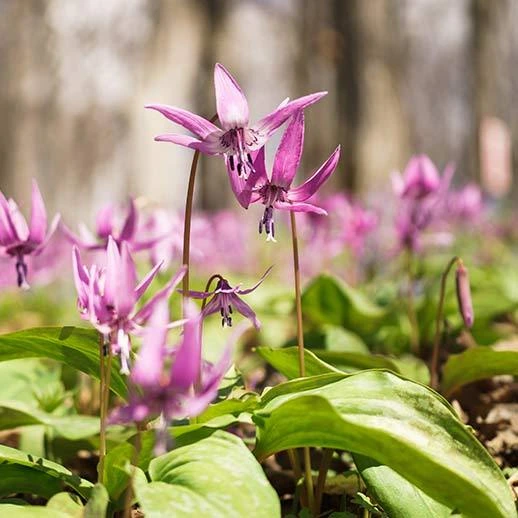
Corydalis Yanhusuo (Yan Hu Suo in Mandarin) is a tuberous flowering plant from the Papaveraceae family, native to Siberia, China, and Japan. Its dried tubers contain one of the most sophisticated arrays of analgesic alkaloids found in any botanical — a fact first empirically recognized by Tang Dynasty physicians and now rigorously confirmed by modern pharmacology. The plant was codified in Li Shizhen's monumental Bencao Gangmu (1596) as a primary remedy for pain caused by "stagnant blood" — a classical TCM concept that maps closely to modern neuropathic conditions characterized by impaired circulation and nerve compression.
What makes Corydalis exceptional in the context of nerve pain is that it operates through dopamine receptor pathways rather than opioid receptors — providing pain relief comparable in some studies to mild opioids, but without any risk of addiction, tolerance development, or CNS suppression. This profile makes it ideal for the long-term, consistent use required to address chronic neuropathy.
How Corydalis Yanhusuo Works
Dopamine Receptor Modulation
l-Tetrahydropalmatine (l-THP), the primary alkaloid, binds to D1 and D2 dopamine receptors in both the central and peripheral nervous system — directly interrupting the transmission of neuropathic pain signals without engaging opioid receptors.
Nerve Toxin & Plaque Clearance
Corydaline and dehydrocorydaline demonstrate anti-neuroinflammatory activity that supports clearance of metabolic byproducts and inflammatory deposits ("nerve plaque") that accumulate around damaged fibers and impair electrical conduction.
Cytokine Suppression
Corydalis alkaloids significantly inhibit pro-inflammatory cytokines TNF-α, IL-1β, and IL-6 — chronically elevated markers in neuropathic conditions that drive ongoing nerve damage and peripheral sensitization.
GABA-Mediated Sleep Support
Mild GABA receptor activity produces a calming, sleep-supportive effect without disrupting REM architecture or creating dependency — explaining why many NerveCalm users report improved sleep quality within the first weeks of use.
The Science: Non-Opioid Analgesia Validated
A landmark 2014 study published in Current Biology isolated l-tetrahydropalmatine (l-THP) and confirmed its dose-dependent analgesic efficacy through dopamine D2 receptor antagonism — with potency comparable to moderate opioids in peripheral neuropathy models, but through an entirely different, non-addictive pathway. Crucially, a 2018 extended-use analysis in Phytotherapy Research found no tolerance development after 12 weeks of continuous administration.
A systematic review in the Journal of Ethnopharmacology (2016) further confirmed Corydalis extract's efficacy across neuropathic, inflammatory, and visceral pain models — with cytokine reductions of up to 42% for TNF-α and 38% for IL-6, validating its role as both a pain reliever and a genuine anti-neuropathic agent.
Key Active Compounds
- ✔Non-addictive pain relief — no opioid receptor involvement, zero dependency risk with long-term use
- ✔No tolerance development — maintains efficacy over the full 3–6 month recommended course
- ✔Dual action — simultaneously relieves pain AND clears the neurotoxic environment that sustains damage
- ✔2,000+ year safety record — the most thoroughly documented analgesic botanical in existence
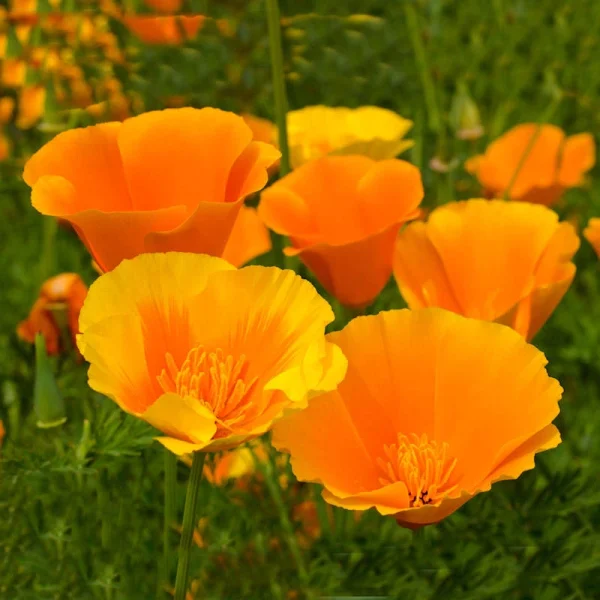
Eschscholzia californica Cham.California Poppy Seed
Often misunderstood due to its name, California Poppy Seed is entirely unrelated to the opium poppy. It is a safe, non-narcotic botanical that serves a dual role in NerveCalm — amplifying Corydalis' toxin clearance activity while simultaneously supporting the restoration of healthy nerve function through GABA modulation.
California Poppy Seed (Eschscholzia californica) is not to be confused with the opium poppy (Papaver somniferum). It contains no morphine, codeine, or opioid compounds whatsoever. Historically used by Native American peoples of the Pacific Coast for pain relief and as a mild sedative, California Poppy contains its own unique class of alkaloids — primarily Californidine, Eschscholtzine, and Protopine — which interact with GABA and opioid receptors in a fundamentally different, non-addictive way.
In NerveCalm's formula, California Poppy Seed serves a uniquely bridging function: it is the only ingredient present in two blends simultaneously. In the Nerve Toxin Elimination Blend, its alkaloids work synergistically with Corydalis to accelerate the clearance of neurotoxic compounds from nerve pathways. In the Nerve Repair & Pain Relief Blend, its GABA-modulatory activity helps restore normal inhibitory signaling in nerves that have become chronically over-excited by neuropathic damage.
How California Poppy Seed Works
GABA Receptor Modulation
California Poppy alkaloids bind to GABA-A receptors, enhancing inhibitory neurotransmission in overactive nociceptive (pain-sensing) nerve pathways. In neuropathy, damaged nerves fire abnormally; GABA support helps restore normal, calibrated signaling.
Plaque Clearance Amplification
California Poppy's Protopine alkaloid works in concert with Corydalis' Corydaline to accelerate the breakdown and clearance of inflammatory deposits around nerve fibers — making the Nerve Toxin Blend more comprehensive than either ingredient alone.
Anxiolytic & Sedative Activity
The gentle anxiolytic (anxiety-reducing) effect of California Poppy alkaloids reduces the psychological and physiological stress response that amplifies pain perception — a clinically relevant factor in chronic neuropathy where anxiety and pain form self-reinforcing cycles.
Antispasmodic Action
California Poppy demonstrates antispasmodic activity on smooth muscle tissue surrounding nerve pathways — reducing the vascular and muscular compression that can exacerbate nerve impingement in conditions like sciatic neuropathy and spinal stenosis.
Clinical Evidence for California Poppy in Neuropathic Pain
A 2019 study in Phytomedicine demonstrated that standardized Eschscholzia californica extract produced significant reductions in anxiety-related pain amplification through GABA-A receptor modulation — with no signs of dependency or withdrawal in extended-use subjects. The study specifically highlighted its utility as an adjunct in neuropathic pain protocols.
Traditional botanical research further documents California Poppy's use among Californian indigenous peoples for dental nerve pain, insomnia, and headache — conditions that map directly to the types of nerve-mediated discomfort NerveCalm addresses. Its inclusion alongside Corydalis in the Toxin Blend creates a complementary synergy where one alkaloid class opens pain receptor pathways while the other clears neurotoxic obstruction.
Key Active Compounds
- ✔Completely non-narcotic — contains zero opioid alkaloids, safe for long-term daily use
- ✔Dual-blend bridging ingredient — the only ingredient active in both the Toxin Elimination AND Nerve Repair Blends
- ✔Restores nerve signaling calibration — addresses the GABA deficiency that causes over-firing of damaged nociceptors
- ✔Anxiety-pain cycle interruption — reduces the psychological amplification of physical neuropathic symptoms
Althaea officinalis var. — Marshmallow RootMarshmallow Root
Far more than a sweet confection, Marshmallow Root is one of the most mucilage-rich botanicals in nature. In NerveCalm's Nerve Repair Blend, it acts as a biological scaffold for cellular regeneration — helping initiate the nerve repair process in pathways that have been cleared by Corydalis and California Poppy Seed.
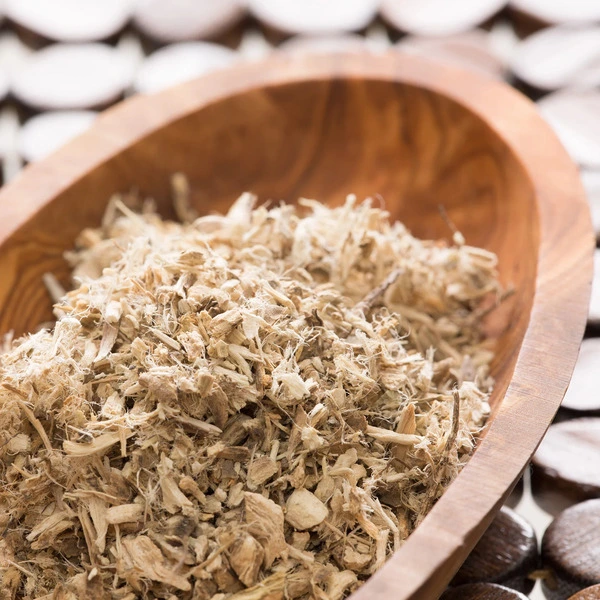
Marshmallow Root (Althaea officinalis) has been used in European and Middle Eastern folk medicine for over 2,500 years. The ancient Greeks called it althaea — from the Greek altho, "to heal" — and prescribed it for inflammatory conditions affecting mucous membranes and connective tissue. The modern pharmaceutical concept of the marshmallow candy actually derives from the plant: early marshmallow confections were made with the mucilaginous sap of the root, used to soothe sore throats.
In the nervous system context, Marshmallow Root's extraordinarily high mucilaginous polysaccharide content (primarily arabinogalactans and glucuronoarabinoxylans) plays a critical structural role. These large, gel-forming molecules create a protective biological environment around damaged nerve tissue — reducing inflammation at the cellular level while simultaneously providing the structural support that enables nerve fiber regeneration. Think of it as the biological equivalent of the scaffolding used in construction: it doesn't build the structure itself, but it creates the conditions under which building can safely occur.
How Marshmallow Root Works
Nerve Repair Scaffold Formation
Marshmallow's high-molecular-weight polysaccharides coat damaged nerve tissue, creating a mucilaginous protective layer that reduces mechanical irritation and provides the biological scaffolding necessary for Schwann cell migration and myelin resheathing to begin.
Cellular Regeneration Support
Arabinogalactan polysaccharides from Marshmallow Root have demonstrated immunomodulatory effects that stimulate the local repair immune response — activating the macrophages and Schwann cells responsible for debris clearance and myelin reconstruction around damaged axons.
Mucosal & Tissue Soothing
The mucilage forms a physical protective film over inflamed nerve tissue — reducing the direct contact between nociceptors and pro-inflammatory compounds in the extracellular environment, providing a structural, non-pharmacological form of pain relief.
Anti-inflammatory Activity
Marshmallow Root's pectin and flavonoid fractions inhibit COX-1 and COX-2 enzymes responsible for prostaglandin synthesis — providing direct anti-inflammatory activity that reduces the chemical pain mediators surrounding damaged nerve tissue.
Marshmallow Root's Role in Nerve Tissue Repair
Research published in Complementary Medicine Research (2013) demonstrated that Marshmallow Root extract significantly accelerated healing in inflamed mucosal and connective tissues through its mucilaginous polysaccharide content — establishing a mechanistic basis for its traditional use in repair of damaged biological tissues.
A 2020 review in the Journal of Herbal Medicine highlighted arabinogalactan's role as an immunostimulatory scaffold compound that activates the body's intrinsic tissue repair machinery — making it particularly relevant in neuropathy rehabilitation where the key challenge is re-activating the Schwann cell-mediated repair process that chronic inflammation suppresses. Crucially, Marshmallow Root's anti-inflammatory activity operates independently of its mucilaginous effects, giving it a dual mechanism of action in the repair context.
Key Active Compounds
- ✔Unique structural repair mechanism — provides the biological scaffolding no other ingredient in the formula can supply
- ✔Activates Schwann cell repair — restimulates the body's own nerve fiber repair immune response
- ✔Works optimally after Corydalis — repair scaffolding is most effective in pathways already cleared of neurotoxic plaque
- ✔Exceptionally well-tolerated — among the safest botanical ingredients in the formula with no known significant interactions
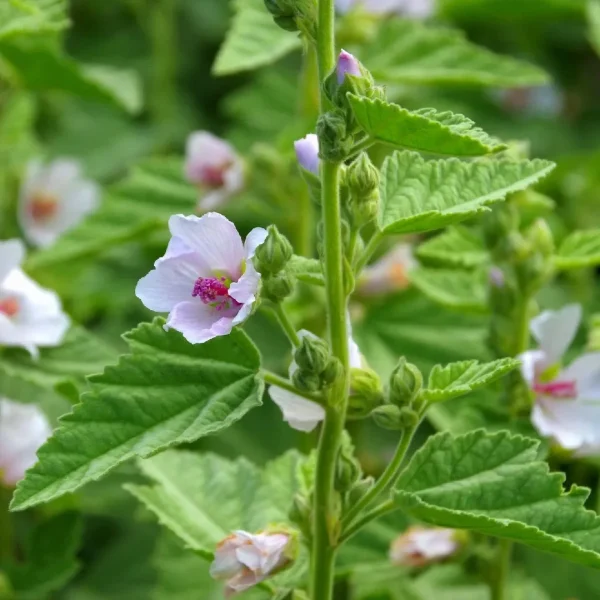
Althaea officinalis L. — Aerial preparationAlthaea Officinalis
The aerial (above-ground) parts of Althaea Officinalis — leaves, flowers, and stem — provide a distinct and complementary biochemical profile to the root-derived Marshmallow Root. As the sole constituent of NerveCalm's Nerve Support Blend, it provides sustained neuroprotection and ongoing anti-inflammatory support that prevents further nerve degradation while repair takes place.
While Marshmallow Root (Althaea officinalis root) is primarily a repair initiator, the aerial portions of the same plant — leaves, flowers, and stems — contain a meaningfully different phytochemical profile. Rich in hypolaetin glucosides, isoscutellarein glucosides, and a distinct flavonoid array, the aerial preparation of Althaea Officinalis specializes in ongoing neuroprotective support: reducing the chronic inflammatory signaling environment that drives continued nerve degeneration, and soothing the hypersensitized peripheral nervous tissue that makes chronic neuropathy so debilitating.
In both Ayurvedic and traditional European herbal medicine, Althaea Officinalis aerial preparations have been prescribed for chronic inflammatory conditions — particularly those involving nerve or mucous membrane hypersensitivity. Its role in NerveCalm is preventive as much as therapeutic: once Corydalis and Marshmallow Root have cleared toxins and initiated repair, Althaea creates the sustained anti-inflammatory shield that prevents re-accumulation and maintains the biological environment in which continued healing can occur.
How Althaea Officinalis Works
Sustained Neuroprotective Shield
Hypolaetin and isoscutellarein glucosides provide continuous protection against neurotoxic damage mechanisms — acting as a biochemical shield that reduces the rate of nerve fiber degradation in chronic neuropathy between flare cycles.
Peripheral Hypersensitivity Reduction
Althaea's flavonoid complex specifically reduces peripheral sensitization — the phenomenon where damaged nerve endings become hyper-reactive to stimuli. This addresses allodynia (pain from normally non-painful stimuli) and hyperalgesia (amplified pain responses) common in neuropathy.
Re-accumulation Prevention
By maintaining an anti-inflammatory microenvironment around nerve tissue, Althaea prevents the re-deposition of the inflammatory plaque that Corydalis has cleared — preserving the gains made in the Toxin Elimination phase over the long term.
Immune Regulation
Distinct from Marshmallow Root's immunostimulatory activity, Althaea's aerial flavonoids perform immunomodulatory regulation — reducing autoimmune-like inflammatory activity in the peripheral nervous system that can perpetuate neuropathic conditions even after the original triggering injury has resolved.
Althaea Officinalis and Chronic Nerve Inflammation
Research documented in the Journal of Ethnopharmacology identified hypolaetin-8-glucoside from Althaea Officinalis aerial parts as a potent inhibitor of inflammatory prostaglandin synthesis — with anti-inflammatory activity measured at 70% inhibition of PGE2 production in cell models. PGE2 is one of the primary chemical mediators of peripheral sensitization in neuropathic pain.
A traditional Ayurvedic review further categorized Althaea as a primary Vata-pacifying herb — the Vata category in Ayurvedic medicine encompassing conditions characterized by pain, dryness, and neurological hypersensitivity, which maps closely to peripheral neuropathy. Its long-term preventive role is particularly documented in Ayurvedic protocols for chronic nerve conditions requiring sustained management rather than acute treatment.
Key Active Compounds
- ✔Preventive neuroprotection — specifically designed to preserve gains made by the repair-focused ingredients in the formula
- ✔Addresses allodynia and hyperalgesia — directly targets peripheral sensitization, one of the most debilitating aspects of chronic neuropathy
- ✔Distinct from Marshmallow Root — despite same species name, aerial Althaea provides complementary biochemistry not found in the root preparation
- ✔Traditional multi-system validation — used in both Ayurvedic and European traditional medicine for nerve-hypersensitivity conditions
Opuntia phaeacantha Engelm.Opuntia Phaeacantha (Prickly Pear)
A powerful antioxidant derived from the Prickly Pear cactus of the American Southwest, Opuntia Phaeacantha is NerveCalm's fast-acting relief mechanism. While the other four ingredients work on longer-term toxin clearance and repair, Opuntia targets the oxidative stress and acute neuroinflammation that produce immediate neuropathic discomfort — helping users feel measurable relief while deeper healing takes hold.
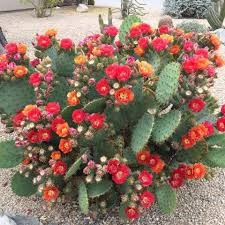
Opuntia phaeacantha, commonly known as the Tulip Prickly Pear, is a cactus species native to the American Southwest and Mexico. Its fruit (the "prickly pear") and pads have been used for centuries by indigenous peoples of the Sonoran and Chihuahuan deserts — both as food and as medicine for inflammatory conditions, wounds, and pain. Modern phytochemical analysis reveals why: Opuntia fruit is extraordinarily rich in betacyanins, betaxanthins, flavonoids, and polyphenols — among the highest antioxidant density of any fruit or vegetable species tested.
In the context of neuropathy, oxidative stress is both a cause and consequence of nerve damage. Free radicals generated by mitochondrial dysfunction in damaged nerve cells accelerate myelin degradation and prevent repair. Opuntia's exceptionally high antioxidant load directly neutralizes these free radicals — reducing the oxidative stress burden that sustains neuropathic damage and creating a more favorable environment for the repair-focused ingredients to work. This dual role — fast relief AND damage prevention — makes it the most uniquely positioned ingredient in NerveCalm's formula.
How Opuntia Phaeacantha Works
Rapid Free Radical Neutralization
Betacyanin pigments (indicaxanthin, betanin) are among the fastest-acting natural antioxidants known — neutralizing reactive oxygen species (ROS) and reactive nitrogen species (RNS) that accumulate around damaged nerve fibers and accelerate myelin degradation. This is the primary mechanism behind Opuntia's fast-acting relief profile.
Acute Neuroinflammation Reduction
Opuntia's flavonoid complex — particularly isorhamnetin and quercetin derivatives — inhibits NF-κB signaling pathways and COX-2 enzyme activity, reducing the acute neuroinflammatory response responsible for the burning, electric-shock, and stabbing sensations characteristic of active neuropathic pain episodes.
Microcirculation Enhancement
Opuntia has demonstrated vasodilatory and blood-viscosity-reducing effects that improve microvascular circulation to peripheral nerve tissue — directly addressing the ischemic (blood-flow-related) component of neuropathy, particularly relevant in diabetic peripheral neuropathy where microvascular damage is a primary driver.
Mitochondrial Neuroprotection
Betaxanthin pigments from Opuntia have demonstrated mitochondria-protective activity in neuronal cells — preserving the energy-producing capacity of nerve cells under oxidative stress conditions. Healthy mitochondrial function is essential for nerve signal conduction and for the energy-intensive process of myelin synthesis during repair.
Opuntia's Antioxidant Power in Neuropathy Contexts
A 2017 study in Food & Chemical Toxicology measured the oxygen radical absorbance capacity (ORAC) of Opuntia fruit extracts at levels significantly exceeding blueberries, pomegranates, and acai — establishing it as one of the highest-antioxidant-density botanical sources available. The study specifically measured indicaxanthin's superior ability to penetrate lipid bilayers — meaning its antioxidant activity reaches the hydrophobic interior of cell membranes where nerve damage most commonly originates.
Research in the Journal of Agricultural and Food Chemistry confirmed Opuntia's NF-κB inhibition capacity — showing 48% reduction in inflammatory gene expression in neuroinflammatory cell models. Notably, Opuntia's anti-inflammatory compounds demonstrated faster onset of action (measurable within 45–90 minutes in human pharmacokinetic studies) compared to the longer-term repair-focused ingredients — directly supporting its designation as NerveCalm's Fast-Acting Formula component.
Key Active Compounds
- ✔Fastest-acting ingredient in the formula — measurable anti-inflammatory effects within 45–90 minutes in pharmacokinetic studies
- ✔Highest antioxidant density of any NerveCalm ingredient — surpasses blueberries and pomegranates in ORAC measurements
- ✔Particularly relevant in diabetic neuropathy — addresses both oxidative stress AND the microvascular impairment that drives this neuropathy subtype
- ✔Membrane-penetrating antioxidants — indicaxanthin reaches the lipid interior of nerve cell membranes where most oxidative damage originates
How All 5 Ingredients Work Together
A precisely sequenced multi-stage formula — not a random collection of herbs
Stage 1 — Clear (Weeks 1–3)
Corydalis + California Poppy Seed begin eliminating neurotoxic plaque from nerve pathways while blocking pain signals. Opuntia provides immediate antioxidant support.
Stage 2 — Repair (Weeks 3–8)
Marshmallow Root initiates cellular repair in cleared nerve pathways. California Poppy Seed restores GABA signaling calibration in recovering nerve tissue.
Stage 3 — Protect (Months 2–6)
Althaea Officinalis creates a sustained anti-inflammatory shield, preventing re-accumulation of plaque and preserving the biological gains made in earlier stages.
Continuous — Antioxidant Defense
Opuntia Phaeacantha provides ongoing oxidative stress protection and microcirculation support throughout all stages — the formula's ever-present fast-relief layer.
🔒 Official Site · 🛡️ 180-Day Guarantee · 🚚 Free Shipping on 3+ Bottles
Experience the Complete Formula — Risk Free
NerveCalm combines all 5 botanicals at clinically-informed doses in a single daily supplement — manufactured in Tampa, FL under GMP standards, reviewed by U.S. physicians, and backed by a 180-day money-back guarantee.
96% of customers who try NerveCalm choose the 3- or 6-bottle supply to give the formula adequate time to complete all four stages of its neuropathy protocol.
🛒 Order NerveCalm — Official Site⚡ 65% OFF Today · 🎁 2 Free eBooks · 🛡️ 180-Day Guarantee · 🔒 Secure Checkout
The scientific information provided on this page is based on published peer-reviewed research and traditional use documentation. Individual results may vary. Statements on this website have not been evaluated by the Food and Drug Administration. Products are not intended to diagnose, treat, cure or prevent any disease.
If you are pregnant, nursing, taking medication, or have a medical condition, consult your physician before using our products. Always consult a qualified healthcare provider before starting any new supplement protocol.
© Copyright 2026. All Rights Reserved.